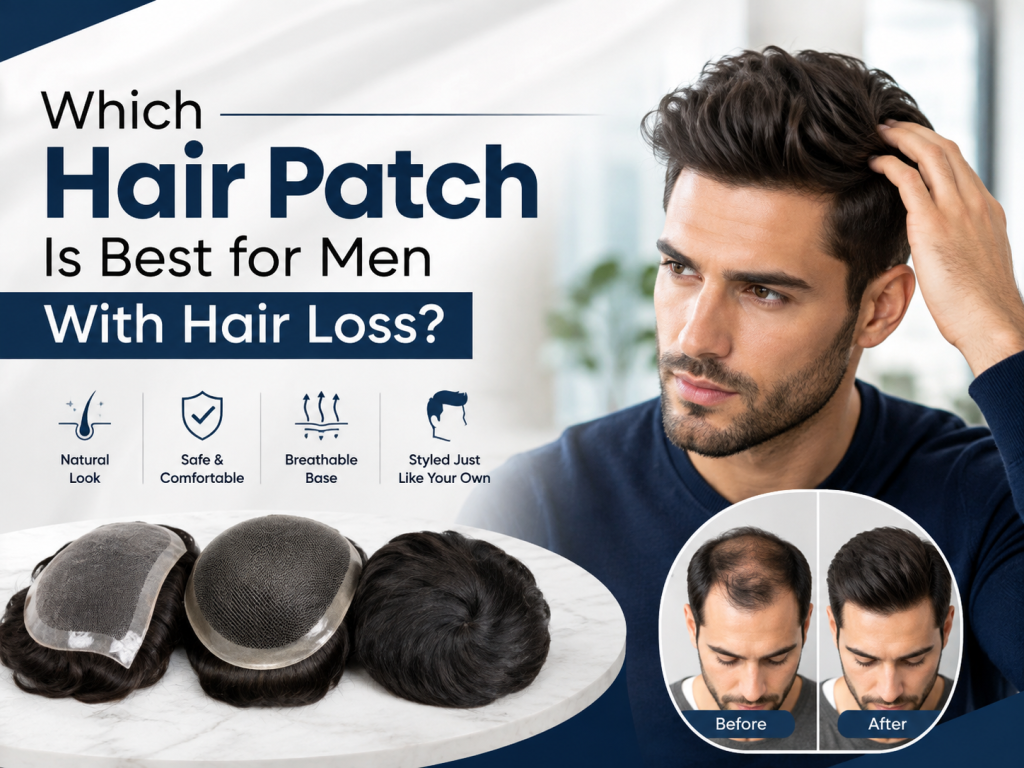
Have you started noticing more scalp showing through your hair? Maybe your hairline is receding, or a bald patch has become difficult to hide. These changes can make you look for a solution that gives you back a fuller, natural-looking head of hair without undergoing surgery. That is often when you start exploring hair patches. But choosing one hair system is not always as simple as it seems.
Is this what is making you search for the best hair patch for men in Delhi?
You will find plenty of options once you start looking for hair patch for men in Delhi. There are lace, skin, PU, monofilament, hybrid, and human hair systems, with each one offering different benefits. The problem is that not every hair patch will suit every man.
The right choice depends on the type of hair loss you are dealing with, the look you want, your hairstyle, your lifestyle, and how much maintenance you are comfortable with. This article will help you understand these factors and compare your options. By the end, you will be able to find a hair patch that suits your hair loss and personal preferences.
Which Hair Patch Is Best for Men?
There is no one best hair patch for men. The hair system that works best for you will depend on what you want from it, how much hair loss you have, and how much you are comfortable spending.
If a natural-looking hairline is your main priority, a skin or PU patch may be a suitable choice. Men who want better airflow may prefer a lace patch, while those looking for durability may consider monofilament or hybrid options. Your budget also decides what is best for you.
For instance, a hair patch costing ₹7,000 may be best for you if you only need to cover a small area of partial baldness. On the contrary, a hair system in the range of ₹25,000–₹70,000+ range may be best for someone else seeking high-quality materials, a more natural finish, or a highly customised hair patch in Delhi.
The higher price does not automatically make one system better for you. You are paying for things such as better hair quality, a more advanced base, greater customisation, and a closer match to your natural hair.
Here is how the main options compare:
| If you want… | You may prefer… | Why it may suit you |
| A natural-looking exposed hairline | Skin or PU | The smooth, skin-like base can create a less noticeable front when properly fitted. |
| Better airflow and a lighter feel | Lace | The open base allows more airflow, which can be useful if you sweat frequently. |
| A stronger option for regular wear | Monofilament | Its construction offers a good balance of durability, comfort, and styling flexibility. |
| A combination of different benefits | Hybrid | Different base materials can be combined to provide support where you need it and airflow where you want it. |
| Natural movement and styling flexibility | Human hair | Real human hair can be matched to your colour and texture and styled more like your own hair. |
So, when you ask which hair patch is best, do not start by asking which one is the most expensive. Start by asking what you need the hair patch to do for you. Your hair loss, preferred look, daily routine, and budget will narrow down the options for you a lot.
Types of Hair Patches for Men
When you start comparing hair patches, you will notice that the main differences come from the base, how the hair is attached, and the type of hair used. These factors affect how natural the patch looks, how comfortable it feels, how long it lasts, and how much maintenance it needs.
Skin or PU Hair Patch
A skin or PU hair patch uses a thin polyurethane base that sits close to the scalp. Its smooth surface can create a scalp-like appearance and help create a natural-looking hairline when the system is fitted and blended correctly.
This makes a skin or PU hair patch worth considering if you want the front of your hair system to look less noticeable. The base can also provide a secure surface for adhesive attachment. That can be useful if you want your hair patch to stay firmly in place during daily activities.
However, choosing a PU base means trading some breathability for this smooth, natural-looking finish. The material does not allow as much airflow as an open lace base. This may become noticeable if you sweat frequently, exercise regularly, or spend a lot of time outdoors.
So, should you choose a skin or PU hair patch?
If your main concern is an undetectable-looking hairline, PU may suit you well. If staying cool and comfortable throughout the day matters more, you may want to consider a lace hair patch instead.
Lace Hair Patch
A lace hair patch uses a fine, mesh-like base that allows air to pass through more easily. This makes it one of the options worth considering if you want a lighter feel and better airflow around your scalp.
Lace can also create a natural-looking hairline because the fine base becomes less noticeable when it is properly fitted and blended with your existing hair. This can make it particularly useful if you live in a hot climate, exercise regularly, or tend to sweat more.
The trade-off is that the lightweight construction needs more careful handling. Lace is generally more delicate than stronger base materials, so rough combing, pulling, or improper maintenance can affect its lifespan.
So, should you choose a lace hair patch?
If you want breathability and a lightweight feel, lace may be the better choice. If you need something that can handle more regular wear with less concern about the base, another option may suit you better.
Monofilament Hair Patch
A monofilament hair patch uses a fine mesh base that is designed to provide greater strength while still giving the hair a natural appearance. Its construction can also allow the hair to be positioned in different directions, giving you more flexibility with parting and styling.
This can make monofilament a practical choice if you wear your hair system regularly and want a balance between durability, comfort, and styling flexibility. It can also be useful when your preferred hairstyle requires the hair to move in a particular direction.
You must, however, note that a stronger construction can feel less lightweight than a delicate lace system. So, monofilament hair patches may not be ideal for hot and humid areas or seasons.
So, should you choose a monofilament hair patch?
Monofilament is worth considering if you want a hair patch that can fit easily into your regular routine and give you more styling flexibility. However, if you live in a hot and humid climate and prioritise maximum airflow, lace may be a more comfortable option.
Hybrid Hair Patch
A hybrid hair patch combines two or more base materials in the same system. This allows different parts of the patch to provide different benefits instead of making you rely on one material throughout.
For example, a hybrid system may use lace in an area where you want better airflow and a skin or PU section where you need greater support or a smoother finish. This can make a hybrid patch useful when you want to balance comfort, appearance, and durability.
With hybrid construction, there is no single standard process. So, the benefits you get will depend on which materials are combined and where they are used.
So, do you find yourself choosing between the breathability of lace and the secure, smooth finish of PU? A hybrid hair patch may provide a middle ground in such situations rather than forcing you to choose one over the other.
Which Hair Patch Is Best for Different Types of Hair Loss?
The best hair patch for you depends on the type and location of your hair loss. For instance, a person with a receding hairline may need a system designed for natural front coverage, while crown thinning may only require a smaller patch. Similarly, men with heavy hair thinning or baldness may need a larger hair replacement system.
Hair Patch for a Receding Hairline
A skin or PU hair patch is one of the best options for a receding hairline when your priority is a natural-looking front hairline. A lace-front hair patch is another suitable option if you want a lighter base with better airflow.
Benefits of Choosing a Skin or PU Hair Patch for a Receding Hairline
- Creates a natural-looking front hairline: The smooth, scalp-like base can make the front appear less noticeable when fitted and blended properly.
- Covers thinning around the hairline: It can restore coverage where the natural hairline has receded without requiring a larger system.
- Provides a smooth finish: The PU base sits close to the scalp, which can help create a cleaner finish around the front.
- Works well with different hairstyles: The hair can be designed around your preferred hairline and styling needs.
- Allows better hairline customization: The shape, density, colour, and texture can be matched more closely to your existing hair.
A lace-front hair patch can be a better alternative if you prioritise breathability and a lightweight feel. It can also create a natural-looking front when properly fitted, making it another option worth considering for a receding hairline.
Hair Patch for Crown Thinning
A 3×3, 4×4, or 5×5-inch crown hair patch with a lace, monofilament, or silk/skin base can be a good option for men with thinning limited to the crown. A 100% human hair patch is also worth considering if you want the added hair to match your natural colour, texture, movement, and styling.
The size should match the area that needs coverage. A 3×3-inch patch may work for a smaller thinning area, while a 4×4 or 5×5-inch crown patch can provide more coverage as the thinning area becomes larger. Some Indian suppliers currently list crown patches in these sizes:
- 2×2-inch: Best for a very small thinning spot where you only need to add coverage to a limited area. Its smaller size can make it easier to blend with the surrounding hair without adding unnecessary coverage.
- 3×3-inch: A good hair patch size when the thinning has spread beyond a small spot but remains concentrated around the crown. It provides more coverage while still keeping the system relatively compact.
- 4×4-inch: Better suited to a wider area of crown thinning where a 3×3-inch patch may not provide enough coverage.
- 5×5-inch: More suitable when thinning covers a larger section of the crown and extends towards the top of the scalp. The larger base provides greater coverage and more room for blending with the surrounding hair.
- 5×3-inch: A useful option when the thinning area is wider in one direction but does not require the same amount of coverage from front to back. Its shape can provide targeted coverage without using a square patch that extends beyond the area you need to cover.
- 4×2-inch: More suitable for a narrow or elongated thinning area where you need coverage across the width but do not need a large patch. It can work when the affected area follows a specific shape rather than forming a wider bald spot.
Note that the largest size is not automatically the best size! Your patch should cover the area where you are losing hair while leaving enough surrounding hair for the system to blend naturally.
Hair Patch for Overall Thinning
A 5×7, 6×8, or 7×9-inch men’s hair system can be a suitable option when thinning has spread across most of the top of your scalp. These larger systems provide more coverage than a small crown patch and can be made with lace, monofilament, silk, skin, or hybrid bases.
A 100% human hair system is worth considering if you want natural movement and styling flexibility. Current Indian listings show 5×7 and 6×8 systems, while some manufacturers offer sizes up to 7×9, 8×10, and larger.
- 5×7-inch: Suitable when thinning covers a moderate area across the top but does not extend too far towards the sides or back. It provides more coverage than a crown patch while remaining relatively compact.
- 6×8-inch: A good option when thinning has spread across a larger part of the top of the scalp. It gives additional coverage while still allowing the system to blend with the hair around it. Human hair 6×8 systems are available with lace, monofilament, and other base constructions.
- 7×9-inch: Better suited when the thinning area is wider and a 6×8-inch system does not provide enough coverage. The larger base can cover more of the top while giving enough space to create the desired hairline and density.
Hair Patch for More Extensive Hair Loss
A larger men’s hair replacement system is generally more suitable when hair loss or baldness covers a significant part of the scalp.
It is always best to look beyond small, targeted patches when your hair loss extends across most of the top of your scalp. The system you choose should provide enough coverage to create a complete look while still blending naturally with the hair you have left. Here is what you should consider when choosing a hair patch for more extensive hair loss:
- Size: A 7×9-inch or 8×10-inch system may be suitable when hair loss covers a large part of the top of the scalp. Larger systems can provide additional coverage when these sizes are not enough.
- Base material: Lace can be a good choice if you want better airflow and a lighter feel. Monofilament, skin, or hybrid bases may be more suitable when durability, attachment, or a different finish is more important to you.
- Hair type: 100% human hair can be worth considering when you want natural movement, texture, and greater styling flexibility. It can also be matched more closely to your existing hair.
- Density: The density should match the amount of hair you still have around the sides and back. A system that is significantly denser can make the top look disconnected from the rest of your hair.
- Hairline and styling: More extensive coverage gives you greater scope to customise the hairline, length, direction, and hairstyle. These choices should work together to create one consistent look.
For example, if you have little to no hair across most of the top but still have good coverage at the sides and back, an 8×10-inch human hair system may give you the coverage and styling flexibility you need.
Hair Patch Comparison: Which One Should You Choose?
Choosing the right hair patch for men in Delhi is important because the base, hair quality, coverage, and construction can all affect how natural and comfortable the final result looks. With so many options available, it can be difficult to know which one will actually suit your hair loss and daily routine. This quick comparison, as shown below, can help you narrow down your options:
| Hair patch type | Natural appearance | Breathability | Durability | Best suited for |
| Skin / PU | High | Moderate | Moderate | Natural-looking front hairline and smooth finish |
| Lace | High | High | Moderate | Hot weather, sweating, exercise, and lightweight wear |
| Monofilament | High | Moderate–High | High | Regular wear and greater styling flexibility |
| Hybrid | High | Moderate–High | High | Men who want a balance of comfort, appearance, and durability |
| Human hair | Very high potential | Depends on base | Depends on base and care | Natural movement, texture, and styling |
| Silk / Mirage | Very high | Low–Moderate | Moderate | A scalp-like appearance and concealed hair knots |
This comparison can help you understand the options, but choosing the best hair patch for men in Delhi is not only about comparing materials. The system also needs to suit your hair loss pattern, existing hair, hairstyle, scalp, lifestyle, and budget. That is where professional guidance can make the process easier.
An experienced hair patch specialist can assess your hair loss and help you choose the appropriate size, base, hair density, color, texture, and attachment method. This can also reduce the risk of choosing a system that looks good on its own but does not blend well with your existing hair.
At Radiance Hair Studio, our experts help you choose personalized hair patches for men based on your individual hair loss, appearance, hairstyle, and lifestyle needs. We offer different hair patch options and can help you find a system that provides the coverage and finish you are looking for.
Are you looking for a hair patch for men in Delhi? Visit Radiance Hair Studio for a personalized consultation.
FAQ
Q. Can a hair patch cover a completely bald area?
Ans: Yes, a suitable hair patch can cover completely bald areas when properly customized and fitted. The base, hairline, density, and attachment method are selected according to the individual’s requirements.
Q. Is a hair patch for men in Delhi comfortable to wear?
Ans: A properly fitted hair patch can be lightweight and comfortable for everyday use. Comfort depends on the base material, fitting method, and correct customization.
Q. Where can I get a customized hair patch for men in Delhi?
Ans: Look for a professional hair replacement studio that offers consultation, customization, fitting, and aftercare. Choosing a specialist helps ensure better matching and a natural appearance.
Q. Can I choose the hair color and hairstyle for my hair patch?
Ans: Yes. A customized hair patch can generally be matched to your preferred hair color, length, texture, density, and hairstyle.
Q. Is a hair patch suitable for men with thinning hair?
Ans: Yes. Hair patches can be customized for different levels and patterns of hair loss, including areas with significant thinning or localized baldness.