Are you considering hair bonding in Delhi but wondering, “Should I go for permanent bonding or temporary bonding?” Maybe you want a hair system that stays in place without daily removal. Or perhaps you like the idea of taking it off whenever you want. So, which of the two hair bonding methods is actually right for you?
It is quite understandable that you may be in a dilemma when it comes to choosing between permanent and temporary hair bonding. It’s going to be especially overwhelming when “permanent” sounds like you are committing to one attachment method forever. But did you know getting a permanent hair bond does not actually mean that?
There is understandably some confusion around these two bonding options. We are here to clear that up and help you choose the option that fits you best. In this guide, we will explain what both options mean and how they differ. We will also look at wear time, maintenance, flexibility, and everyday use.
Permanent vs. Temporary Hair Bonding: The Quick Answer
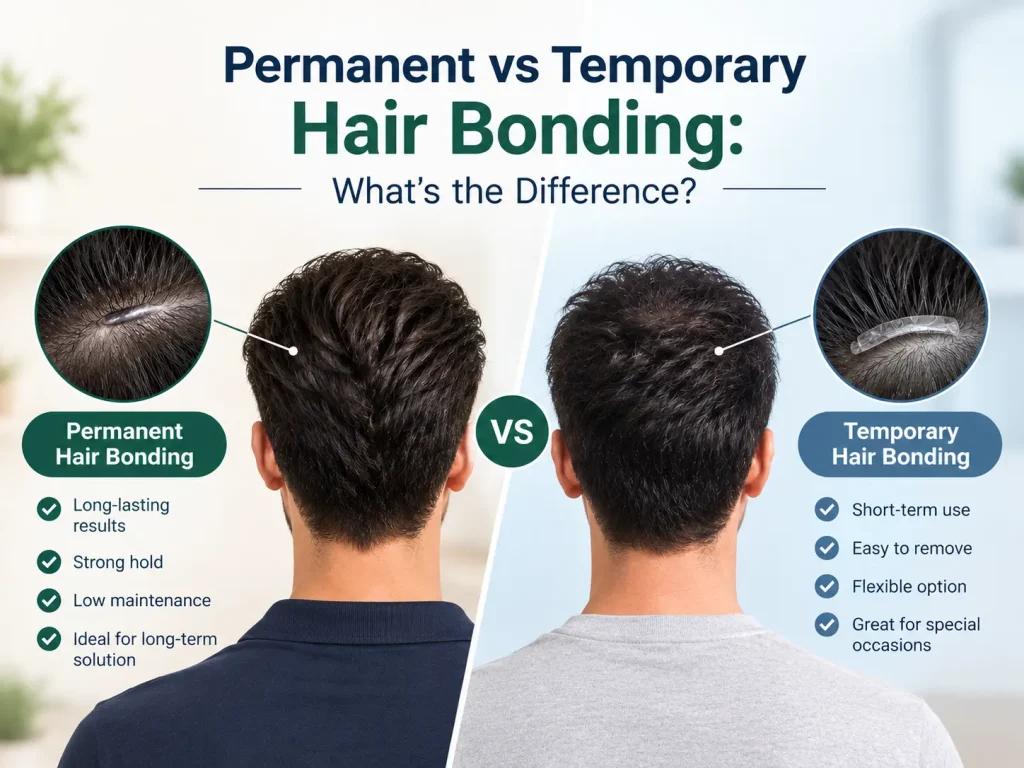
Permanent hair bonding in Delhi is designed for longer, continuous wear, while temporary hair bonding in Delhi allows a hair system to be removed and reapplied more frequently. Neither of the two options is truly permanent. In fact, the actual wear time for both hair systems depends on the adhesive, hair system, scalp, lifestyle, and maintenance routine.
Here is a quick comparison between permanent and temporary hair bonding methods:
| Factor | Permanent Hair Bonding | Temporary Hair Bonding |
| Wear pattern | Longer, continuous wear | Shorter, more flexible wear |
| Removal | Usually done during scheduled maintenance | More frequent removal and reattachment |
| Flexibility | Lower | Higher |
| Daily convenience | More convenient once fitted | Requires more regular involvement |
| Scalp access | Less frequent access between maintenance sessions | More frequent access |
| Maintenance | Planned maintenance and rebonding | More frequent removal or reattachment |
| Lifestyle | Suits people who want continuity | Suits people who want flexibility |
| Commitment | Greater | Lower |
The exact experience of wearing either hair system will always vary depending on the hair system, attachment method, adhesive, scalp condition, and individual routine.
What Is Hair Bonding?
Hair bonding is a non-surgical hair replacement method in which a hair system or hair patch is attached using an adhesive or another suitable attachment method. The goal here is to keep the system securely in place while creating a natural-looking appearance that blends with your existing hair and scalp.
But there is one important thing that you should understand before we go any further.
Hair-System Bonding vs Bonded Hair Extensions
The term hair bonding can sometimes be used for two completely different applications. It can indeed be confused with bonded hair extensions, which are completely different from hair bonding.
| Hair-System Bonding | Bonded Hair Extensions |
| Attaches a hair system or hair patch to the scalp or attachment area | Attaches additional hair to existing natural strands |
| Primarily used for hair replacement | Primarily used to add length or volume |
| Uses suitable adhesives, tapes, or other attachment methods | May use methods such as keratin or fusion bonds |
| Has different maintenance and removal requirements | Has different care and potential hair-stress considerations |
This article focuses on hair-system bonding for non-surgical hair replacement. Bonded hair extensions are a different procedure and should not be treated as the same thing. This distinction between the two matters because the attachment method, maintenance routine, and potential concerns can be very different for each.
Is Permanent Hair Bonding Really Permanent?
No, permanent hair bonding in Delhi does not mean that the hair system stays attached forever. The word “permanent” here generally refers to a longer-wear or continuous attachment approach. That means your hair system remains attached between maintenance or rebonding sessions rather than being removed frequently.
Eventually, the bond needs to be maintained or replaced as it naturally weakens because:
- Your scalp produces oil and sweat throughout the day.
- Your skin also naturally sheds cells.
- At the same time, the attachment is exposed to movement, moisture, and changing environmental conditions.
What “Permanent” Usually Means In Hair Bonding
- Longer continuous wear
- Fewer removal and reattachment cycles
- Scheduled professional maintenance
- Rebonding when the attachment needs refreshing
- A more consistent daily routine
What “Permanent” Does Not Mean in Hair Bonding
- A lifetime attachment
- No maintenance
- One application that lasts indefinitely
- A hair system that never needs replacing
This is why it is more helpful to think of permanent hair bonding as longer-wear bonding rather than an attachment that lasts forever. The hair system can stay attached for an extended period, but the bond will eventually weaken. When that happens, the system needs to be removed, the scalp and base cleaned, and the bond reapplied.
It is also important to understand that the bond and the hair system are not the same thing. The bond may need to be refreshed several times while the same hair system continues to be used. So, permanent bonding refers to how the system is worn, not how long the hair system itself will last.
What Is Permanent Hair Bonding?
In the hair replacement industry, permanent hair bonding is better understood as a semi-permanent or longer-wear attachment method.
It involves securing a hair system directly to the scalp using a liquid adhesive or bonding tape. This allows the system to stay attached through everyday activities such as sleeping, showering, and exercising.
The hair system itself can have different types of bases, each of which offers different benefits. The base you choose can affect breathability, appearance, durability, and how the system is attached and maintained.
For example, a lace base allows greater airflow through the system, making it a popular choice for people who prioritise breathability. A thin polyurethane (PU) or “skin” base creates a smooth surface that can provide a more seamless appearance against the scalp.
The right base therefore depends on what you need from your hair system, including your lifestyle, preferred appearance, and maintenance routine.
Permanent bonding allows you to keep the system attached continuously when it is designed for longer wear. This means you do not need to remove it at the end of the day. However, note that the bond will eventually need professional maintenance and reapplication as it begins to loosen with normal wear.
How Does Permanent Hair Bonding in Delhi Work?
With permanent bonding, your specialist first assesses your hair loss and chooses a hair system that suits your coverage, scalp, lifestyle, and desired appearance.
The scalp is then cleaned and prepared before the appropriate adhesive or bonding tape is applied. Your specialist carefully positions the system and secures it to the prepared area.
The hair is then cut, blended, and styled so the system works naturally with your overall look. When the bond eventually begins to loosen, the system is removed, cleaned, and professionally rebonded.
How Long Does Permanent Hair Bonding Last?
A professionally applied permanent hair bond typically lasts around 3 to 6 weeks before it needs to be removed and reapplied. This timeframe can vary from person to person, depending on several factors.
- Adhesive Type: Different liquid adhesives and bonding tapes offer different levels of hold. The adhesive selected for your system can therefore affect how often you need rebonding.
- Scalp Oil: Your scalp naturally produces sebum, or oil. Higher oil production can interfere with adhesion and may cause the bond to loosen sooner.
- Sweating: Frequent or heavy sweating can affect adhesive performance. If you exercise regularly or have a very active lifestyle, you may need more frequent maintenance.
- Water Exposure: Regular washing, swimming, and prolonged moisture exposure can affect different bonding products differently.
- Hair-System Base: Lace, polyurethane, monofilament, and hybrid bases have different properties. Your base can influence both attachment and maintenance requirements.
- Climate: Heat and humidity can affect how certain adhesives perform. This can be particularly relevant if you spend a lot of time outdoors or live in a hot, humid environment.
- Maintenance Routine: Regular cleaning and timely maintenance can help you manage the bond properly. Delaying maintenance can make the attachment more difficult to manage.
What Is Temporary Hair Bonding?
Temporary hair bonding is designed for people who want to remove and reattach their hair system more frequently. It gives you greater control over when you wear the system and when you want to take it off.
The attachment method depends on the hair system you choose and how you plan to wear it. Bonding tapes and removable adhesives are commonly used when regular removal is part of the routine.
How Does Temporary Hair Bonding Work?
With temporary bonding, your specialist first prepares the scalp and attachment area before applying the chosen tape or adhesive. The hair system is then positioned carefully and styled to give you the desired look.
You can remove temporary hair bonding yourself when needed. All you need to do is release the attachment carefully. The system and scalp should then be cleaned before the hair system is attached again. Temporary bonding is particularly useful if you do not want to keep your hair system attached continuously.
When Might Temporary Hair Bonding Suit You?
The temporary hair bonding method can be a practical option if you prefer to:
- Remove Your System Regularly
- Access Your Scalp More Frequently
- Avoid Continuous Wear
- Wear Your System Only When You Need It
- Have More Flexibility in Your Routine
- Keep Your Commitment to a Hair System Lower
The flexibility of using temporary bonding, however, comes with trade-offs like more frequent cleaning, attachment, removal, and handling of the system.
Permanent vs Temporary Hair Bonding: What Is the Real Difference?
Permanent bonding is designed to keep your hair system attached for several weeks, while temporary bonding allows you to remove and reattach it more frequently.
| Factor | Permanent Hair Bonding | Temporary Hair Bonding |
| How It Is Worn | The hair system stays attached continuously between maintenance sessions. | The hair system is removed and reattached more frequently. |
| Typical Bond Duration | Around 3–6 weeks, depending on the system, adhesive, scalp, and lifestyle. | Designed for shorter wear, like a day, and more frequent removal. |
| Removal | Usually removed by a professional during scheduled maintenance. | Can be removed when needed, following the correct removal process. |
| Scalp Access | You have less frequent access to your scalp between maintenance sessions. | You can access your scalp more frequently because the system is removed regularly. |
| Daily Convenience | More convenient if you want to wear your system continuously without daily removal. | Requires more regular removal, cleaning, and reattachment. |
| Flexibility | Better suited to people who want a consistent, continuous-wear routine. | Better suited to people who want control over when they wear their system. |
| Lifestyle | Can suit regular work, travel, exercise, and everyday wear. | Can suit changing routines, occasional wear, or people who prefer regular removal. |
| Maintenance | Requires scheduled cleaning, rebonding, and system maintenance. | Requires more frequent cleaning and reattachment. |
| Best Suited For | People who prioritise continuous wear and convenience. | People who prioritise flexibility and frequent removal. |
Neither permanent nor temporary bonding method is automatically better. The right choice depends on how often you want to remove your system, how active your lifestyle is, and how much maintenance you are comfortable with.
Which Is Better: Permanent or Temporary Hair Bonding?
There is no universal winner between permanent and temporary hair bonding methods. The right choice depends on your hair, scalp, lifestyle, maintenance preferences, and how often you want to remove your hair system.
Permanent Hair Bonding May Suit You If:
- You want your hair system to remain attached continuously.
- You prefer not to remove it frequently.
- You want a consistent appearance every day.
- You have a routine that suits longer-wear attachment.
- You are comfortable with scheduled professional maintenance.
- You prefer convenience over frequent removal.
Temporary Hair Bonding May Suit You If:
- You want to remove your system regularly.
- You prefer greater control over when you wear it.
- You want more frequent access to your scalp.
- You only want to wear a system at certain times.
- You prefer a lower-commitment approach.
- Your lifestyle or routine changes frequently.
So, don’t ask, “Which one is better?” Instead, ask yourself, “Do I want more continuity or more flexibility?” That question can make the decision much easier.
Conclusion
We now understand that permanent bonding gives you longer, continuous wear. The temporary hair bonding in Delhi method, on the other hand, gives you more flexibility through frequent removal. What you choose may, in the end, depend on your hair loss, scalp, lifestyle, and how often you want to remove your hair system.
It is also important to understand that what works perfectly for one person may not be the right fit for someone else. That is why understanding your options before choosing a bonding method matters.
At Radiance Hair Studio in Delhi, we can help you understand which hair system and bonding method may suit your needs. Our hair specialists can assess your requirements and answer your questions before you decide.
Still confused? Walk into our hair studio in Delhi, and our hair specialist will clear all your queries and help you make the right choice.
FAQs
Q. Can you sleep with a permanently bonded hair system?
Ans: Yes, you can sleep with a permanently bonded hair system when it has been properly attached. The bond is designed for continuous wear between maintenance sessions.
Q. Can you shower or swim with permanent hair bonding?
Ans: Yes, permanent hair bonding is designed to withstand everyday activities like showering and exercise. However, prolonged water exposure and swimming can affect some adhesives.
Q. Is temporary hair bonding safer for your scalp?
Ans: No, permanent and temporary bonding can both be suitable when the right attachment method is used correctly. Scalp sensitivity, adhesive choice, hygiene, and proper removal all matter when protecting scalp health.
Q. Can permanent hair bonding damage your natural hair?
Ans: Permanent bonding does not automatically damage your natural hair. However, improper application, removal, or repeated tension can contribute to hair breakage.
Q. Can the same hair system be used after rebonding?
Ans: Yes, a hair system can often be reused after the bond is removed and professionally refreshed. The system should be cleaned and checked during maintenance before it is attached again. Its overall lifespan depends on the base, hair quality, wear, and daily care.